 |
| The late, great Oscar-winning African American actress, Hattie McDaniel
This is a powerful and thought-provoking essay written by the brilliant screenwriter and Spike Lee collaborator James McBride--his produced work includes "Miracle At St. Anna, and current Sundance Film Fest lighting rod "Red Hook"--regarding Hollywood's retrograde state-of-affairs, when it comes to African American film. It almost seems as if Hollywood--like the GOP--is lobbying for a new "Jim Crow" in Hi-Res HD. McBride's commentary is a most cogent and brutally honest assessment of life on the celluloid plantation, in the era of a Black Commander-In-Chief.
Being a Maid
by James McBride
Last night, President Obama, our first African American President, delivered his third State of the Union address. On that same day, the American Academy of Motion Picture Arts and Sciences nominated two gifted African American actresses, Viola Davis and Octavia Spencer, for Oscars for playing maids in The Help. This is 73 years after the first African American to win an Oscar, Hattie McDaniel, garnered the award for the same role – as a maid, and a slave maid at that, winning the Oscar in the Best Supporting Actress category on Feb. 29, 1940.
And here we are, in the year of our Lord, Jan 25, 2012. Maybe I’m getting old, but the irony of this is too much. Or perhaps I’ve heard this song before. In the 1970’s, when I was a freshman at Oberlin College, my white friends and I used to sit up and talk about racism and solving society’s problems all through the night until the sun rose. Not much good came from these talks, the least of which is I hoped to get laid, which rarely happened. But on those cold nights, I was convinced that when I walked out of college, racism would be just about finished. Instead, it smashed me across the face like a bottle when I walked into the real world. Now, 33 years later, I find myself talking about the same thing I talked about when I was a college freshman.
I have no take with Ms. Davis and Ms. Spencer. They’re outstanding actresses. But the nomination of these two women by the Hollywood community 73 years after Hattie McDaniel won for the same role speaks for itself. As co-writer and co-producer of Spike Lee’s newest film “Red Hook Summer,” and his previous feature film “Miracle At St. Anna,” I have a clear eyed view of what the cultural display of African American life means to hearts in Hollywood, a land of feints and double meanings and as tricky to navigate as anything inside the Beltway. I wish someone had told me this when I was a freshman at Oberlin.
America is a super power not because we make the biggest guns. We’re a superpower because our culture has saturated the planet: Levis, Apple, Nike, Disney, Coke, Pepsi, McDonald’s, Jazz, Rhythm n Blues, Rock ‘n Roll, and Hip Hop. Our culture dominates the world far more than any nuclear bomb can. When you can make a person think a certain way, you don’t have to bomb them. Just give them some credit cards, a wide screen 3D TV, some potato chips, and watch what happens. This kind of cultural war, a war of propaganda and words, elements that both Hollywood and Washington know a lot about, makes America powerful beyond measure. The hard metal of this cultural weaponry, much of it, emanates from the soul of Blacks, the African American experience in music, dance, art and literature.
|

Wednesday, January 25, 2012
James McBride: "Being a Maid"

Thursday, December 8, 2011
"The Peace Sign" (Barry Michael Cooper's 1990 Directorial Debut)

"The Peace Sign" was the first film I ever directed. Watching Mario Van Peebles--who was not only gracious enough to invite me to the set of "New Jack City," the screenplay I wrote for Warner Brothers in 1987, which became a hit film in 1991 and ignited the careers of Van Peebles, Wesley Snipes, Ice T, Allen Payne, and Chris Rock--but he allowed me to watch him work as he set up shots with the DP Francis Kenny, block scenes with the actors, and masterfully helm a movie that became a classic.
 |
| photo still of David Mills, "The Peace Sign," 1990 |
 |
| photo still of Eric Daniels, "The Peace Sign," 1990 |
 |
| photo still of Derrick Roberts, "The Peace Sign," 1990 |
 |
| photo still of Brent J. Cooper, "The Peace Sign," 1990 |

Monday, November 14, 2011
More Video From The Planet Rock Panel@The Paley Center-12.September.2011:Melle Mel

Melle Mel:
"Child is born/with no state of mind/blind to the ways/of mankind..."
Melle Mel is to Hip Hop/Modern American Music, what Miles Davis is to Jazz, what Bob Dylan and William "Smokey" Robinson are to Rock&Soul, what Huddie William "Leadbelly" Ledbetter and Woody Guthrie are to Folk and Blues, and what Beethoven is to Classical; Melvin "Melle Mel" Glover--of the storied Hip Hop collective known as Grandmaster Flash and the Furious Five--is a composer of unparalleled excellence. Melle Mel is The Blueprint for an MC. Melle Mel represents The Beginning. If there was no Melle Mel, if there was no Hip Hop Rosetta Stone known as "The Message," there would be no Jay-Z, no Yeezy-Weezy-Jeezy, no KRS-1, no LL Cool J, no Rakim, no Big Daddy Kane, no Biggie, no Tupac, no nothing. In the grand hall of cultural mirrors that comprise The Great American Songbook, "The Message" reflected the dark light which cast shadows from the inner city's abyss. It was an S.O.S. at the crack of the dawn of the dead, in President Reagan's Mourning In America.
Friday, November 11, 2011
More Video From The Planet Rock Panel@The Paley Center-12.September.2011: Azie Faison

Azie "AZ" Faison.
Former street entrepreneur/coke dealer, intelligent MC, author, screenwriter, filmmaker, urban griot, survivor. Azie Faison has lived a lot of lives in his young 47 years. He has seen death up close and personal; he was shot nine times back in 1987, when his drug stash house in the Bronx was robbed. The botched robbery quickly dissolved into a bloody massacre which left three people dead, and three people fighting for their lives, including AZ. Three years later, Azie's best friend and fellow drug dealer Rich Porter--along with Rich's little brother Donnell--was kidnapped and brutally murdered, in a horrifically tragic story, that commanded front page bold print, and took the lead on nightly newscasts across the country.
More Video From The Planet Rock Panel@The Paley Center-12.September.2011: Nelson George

By Barry Michael Cooper
Nelson George.
Prolific author, prescient cultural critic and American historian, visionary filmmaker, director, and television producer. For over thirty years, Nelson has not only established himself as a preeminent composer of American Literature (from the Amsterdam News, to Billboard, to the Village Voice, to the New York Times, Playboy, best selling books, including his latest masterpiece, a novel titled "The Plot Against Hip Hop"), but he has also inspired a generation of African American writers to literary excellence.
Sunday, November 6, 2011
AP: Blogger Attacked At KFC-Points Finger At Hip Hop Star

 By TOM HOWE-VERHOVIK and MALINDE WHALUM
BRONX, NY (AP)-Almost twenty-four hours after one of the most bizarre press conferences in recent NY history, gossip blogger Sharon Thorne--the woman who many believe incurred the volatile actions of controversial hip hop star Malachi Joye, by sarcastically questioning his botched suicide attempt in Paris last week--was attacked by two unidentified women at a Kentucky Fried Chicken restaurant in the Bronx's Fordham Road neighborhood.
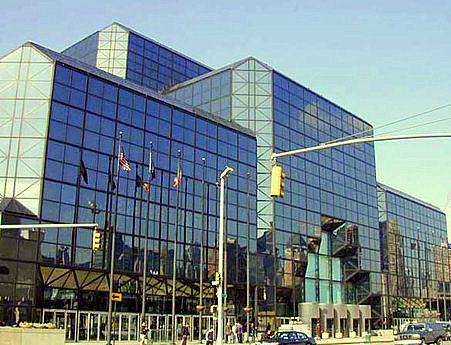
Thorne--45--and her scandulous imtellinonem.com blog (which reportedly receives nearly 1 million page visits a week) seems to have locked the troubled Joye in her online crosshairs for the past six months, with stories that have questioned his sexual preference, alleged drug use, poor business acumen, and lagging album sales. When Thorne questioned Joye in yesterday's press conference at the Jacob Javits Center in Manhattan, about why he would try to burn his underwear instead of having them cleaned, and referred to him by a somewhat veiled scatological term (Thorne called Malachi Joye, "Boo Boo," and said she meant that "literally and figuratively"), Joye seemed to snap emotionally, and threw a chair into the crowd of reporters, while hurling a profanity-laden diatribe at Thorne, as his manager Walden "Whip" Underwood, Dead-On label CEO Edgar "Spank" Jordan, and his security team, escorted Joye out of the building.
Saturday, November 5, 2011
New Jack Epoch (2008 Liner Notes From New Jack Swing Gold Anthology)

NEW JACK EPOCH
(Liner notes to the 2008 New Jack Swing Gold Anthology on Hip-O)
By Barry Michael Cooper
As the country did its best to slush through its extended winter of discontent created by the perfect storm of Louis XVI-like Reaganomics, the filthy lucre of junk bonds, and the Inner City's basso-profundo waltz of automatic gunfire underscoring the horror film known as Monster Crack, there was a hint of life as a rose grew in the bricks of cooked cocaine.
It was the Spring of New Jack Swing.
Horticultured by Teddy Riley, New Jack Swing was a colorful urban opera, a musical con-flux of robotic R&B, cool jazz glissandi, hip hop kick-snare-cut-scratch and claw chorused with sanctified church vocals. Drums that could make Nijinsky leap and strings that could make Verdi weep, New Jack Swing was the soundtrack for a Me Decade in manic-depressive flux. From the Glick-ish, Wall Street upstarts knocking back magnums of Krug and snorting Peruvian flake in the tony, Modernist zoo known as The Royalton--grazing in the Hey!-Look-At-Me!-ride of new money before burning it in the nihilist bonfire of their own vain excesses--to the dope money Glitter Kids trying to glow in the shadows of the ghetto. In their attempt to inhale the richly oxygenated atmosphere of the Grand Bourgeois--breathing the million-aire--this Generation of the Discarded, these Children Of The Disconnect burned their lungs with the noxious gas of twisted ambition and unbridled greed that silently suffocated their souls. Hip Hop's court jester, Biz Markie, had the perfect name for this condition.
Biz called it The Vapors.
Wednesday, November 2, 2011
AP Exclusive: Hip Hop Star Melts Down In Press Conference After Botched Suicide Attempt
 By TOM HOWE-VERHOVIK and MALINDE WHALUM
NEW YORK (AP)-Just minutes after touching down from Paris, France at New Jersey's Teeterboro Airport, troubled Hip Hop megastar Malachi Joye was rushed from the descended staircase of his Gulfstream G550, into a waiting Aston Martin Rapide, and into the crowded press area of Manhattan's Jacob Javits Center on 34th Street.


Subscribe to:
Posts (Atom)